What NYC Building Managers Need to Know
Every first-time caller asks the same questions. “Do I have to do this?” The answer is always yes. If your building is in Community Districts 4, 6, 8, 9, or 16 — in any of New York City’s five boroughs — your LL 152 inspection is due by December 31, 2026. Miss that deadline and you’re looking at a $10,000 civil penalty. No grace period. No appeal.
Local Law 152 NYC has been on the books since 2016. Its purpose is straightforward: get a Licensed Master Plumber (LMP) into the cellar of every gas-connected building in New York City on a regular basis to check the condition of exposed gas piping. The city learned some hard lessons about aging infrastructure, and this law is the result. Whether building managers agree with that logic or not, and many don’t at first, the deadline is the deadline.
We’ll cover what to expect during the inspection, what happens if deficiencies are found, how much it costs, and what to look for in the company you hire.
Which NYC Buildings Are Due for an LL152 Inspection in 2026?
Local Law 152 NYC requires gas piping inspections every four years, organized by the Community Board District. The law applies to virtually all buildings with gas piping, with one exception: one- and two-family homes classified under occupancy group R-3 are exempt. Three or more units and a gas connection? You’re covered.
How Do I Find My Building’s Community District?
The NYC Department of City Planning maintains an address lookup tool that identifies your community district by building address.
Inside an LL152 Inspection: What the LMP is Looking For
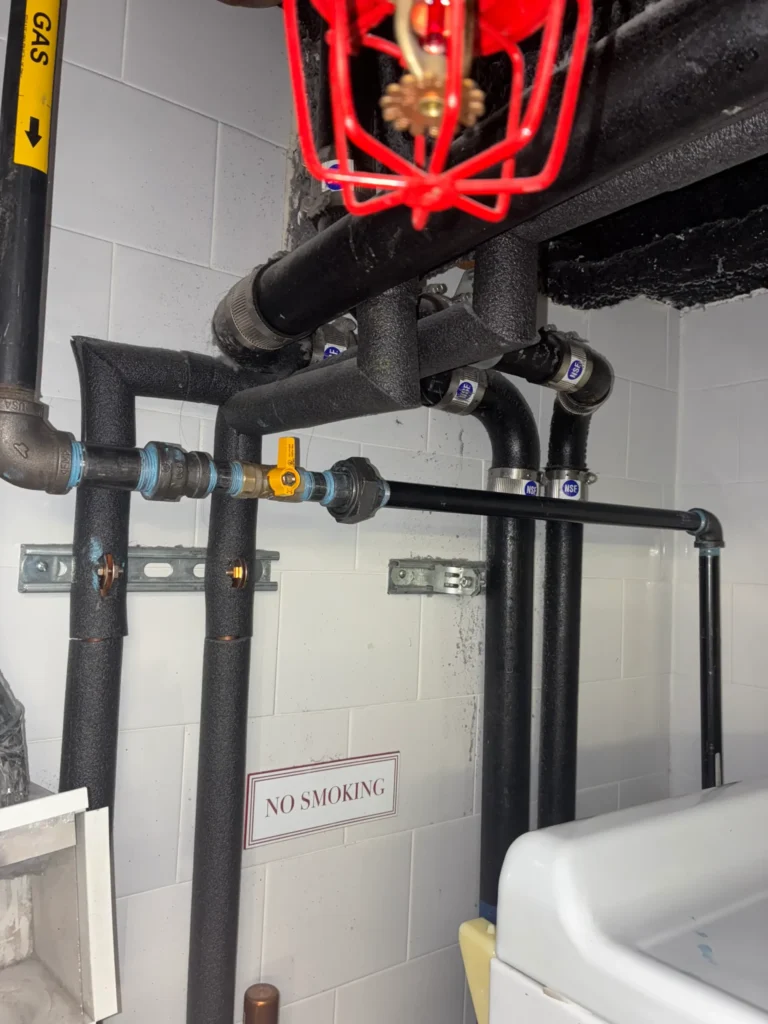
The process starts before the LMP sets foot inside. The gas detector gets calibrated outside the building first. Then it’s a systematic tour of the cellar, checking for active gas leaks while simultaneously inspecting the condition of all exposed piping.
What inspectors are looking for:
- Corrosion and rust on exposed pipes
- Illegal fittings or connections
- Improper installations
- Unsupported piping (gas pipes must be supported at regular intervals per NYC Department of Buildings code)
One thing the inspection does not cover: anything inside walls or ceilings. LL152 is limited to exposed gas pipes. That scope is intentional and keeps the process manageable for building managers.
What’s the Most Common Finding?
Rust and unsupported pipes. By a wide margin. If a pipe shows moderate surface rust, it can be scraped and painted. Severely corroded pipes need to be replaced. The Department of Buildings (DOB) provides guidelines for making that call. When pipes need additional support, they get installed to code, which is routine work for a qualified LMP.
Worth noting: roughly 75% of the buildings we’ve inspected passed without any deficiencies at all. The 25% that didn’t require scraping, painting, and adding supports. Nothing catastrophic.
What’s the Difference Between a Deficiency and a Violation?
A deficiency is a condition that requires correction, but it does not automatically trigger a fine. The building owner has time to address it and file the appropriate documentation. If corrections are complex, the window can extend to 180 days.
A violation is different. Illegal gas connections generate fines at the DOB’s discretion. But the most common penalty isn’t tied to anything found inside the building. It’s failing to submit the inspection report before the December 31 deadline.
After the Inspection: Deadlines, Deficiencies, and the DOB Filing
Once the inspection is complete, the LMP files the Gas Piping System Periodic Inspection Certification with the NYC DOB through their online portal. As of March 2026, the NYC DOB requires LMPs to schedule inspections 48 hours in advance. This small administrative step doesn’t significantly affect turnaround time for buildings that plan ahead.
The December 31 filing deadline is fixed. No grace period and no negotiating after the fact.
The Mistake That Costs Building Managers $10,000
The most common reaction we hear from building managers dealing with LL152 for the first time isn’t panic. It’s skepticism. Something along the lines of “These gas pipes have been in the ground for over a hundred years. Why does the city care now?”
It’s a fair question. And the honest answer is that while the rollout of this program has been complicated by COVID extensions, evolving rules, and shifting deadlines, the underlying premise is sound. Gas piping problems don’t announce themselves. They accumulate quietly until something goes wrong. That’s why periodic inspections exist.
Consider what BPNY found while reviewing an inspection report for a building in lower Manhattan: a spa with bathing pools in the cellar and a water-leaking vault where the gas service entered the building. The constant humidity had done significant damage: a large 3-inch gas service line was severely corroded.
The inspection report from the company that had done the work recommended spraying the pipe with WD-40 and monitoring it going forward. We checked that recommendation directly with the NYC DOB. Neither remedy was consistent with gas piping rules. The corroded pipe needed to be replaced. The proper proposal came in at over $60,000.
Three out of four buildings pass their LL152 inspection without issue. But when something turns up, the qualifications of the company doing the inspection matter.
Ready to schedule your 2026 LL152 inspection? Call (718) 460-4600 or email info@rpzny.com to get started.
How to Get Your Building LL152-Compliant Before the Deadline
The process is simpler than most building managers expect.
- Confirm your community district and verify your building is due in 2026.
- Contact Backflow Preventer of New York, LLC to schedule. All we need upfront is a deposit and cellar access. Clear any obstructions so all exposed piping can be reached.
- We schedule with the DOB and conduct the inspection.
- If deficiencies are found, we can manage the corrections. You don’t need a second contractor.
- We file the certification with the NYC DOB electronically, on the same day as the inspection if needed.
The process can take as little as three days from the first call to filed certification. Even in December, when the deadline rush hits, we have consistently accommodated tight turnarounds.
Managing LL152 Compliance Across a Portfolio
Property management companies with multiple buildings don’t need to manage each inspection separately. Provide a building list and we’ll contact the superintendent at each property to arrange access. Depending on your preference, we either submit the certification directly to the DOB or forward the completed forms for your team to file.
What Does an LL152 Inspection Cost in NYC?
BPNY’s Local Law 152 inspections in NYC are priced as a flat fee based on building size:
- Buildings with 24 units or fewer: $750
- Larger buildings: $1,250
Those fees have held steady with no current plans to change them. If repairs are needed, costs depend on what’s found. Most buildings requiring corrections need minor work. A free quote is available once deficiencies are identified.
Why the Licensed Master Plumber You Choose Matters
Only a Licensed Master Plumber with the appropriate DOB credentials can legally conduct an LL152 inspection, make corrections, and file the certification. At BPNY, your certification is personally conducted and signed off. And because we handle inspection, repairs, and DOB filing as a single vendor, building managers aren’t left to coordinate between an inspector who found a problem and a separate contractor to fix it. Some companies in this space do inspections only. That works fine when everything passes. When it doesn’t, you’re back to making calls.
BPNY’s team holds the DOB certifications required to work on gas piping and maintains working relationships with Con Edison and National Grid. That authorization matters when deficiencies involve utility coordination.
Don’t Wait Until December
The building managers who are scrambling in November are the ones who assumed they’d have more time. Schedule now and avoid the year-end rush. Put this task behind you.
Call (718) 460-4600 or email info@rpzny.com to schedule your 2026 LL152 inspection or get a free quote. If you manage multiple properties, send us your list of buildings, and we’ll handle the coordination from there. And if you need a single vendor for the broader range of plumbing and heating services, we’ve got that covered, too.